16 Smart Canning Storage Ideas That Protect Your Harvest
Introduction
These ideas cover safety rules, small space tricks, simple DIY projects, basement setups, and ways to display your hard work.
Each one helps you avoid broken seals, rusted lids, and faded food. Pick the ones that fit your home and start organizing.
Idea 1: Take the Rings Off Right After Cooling
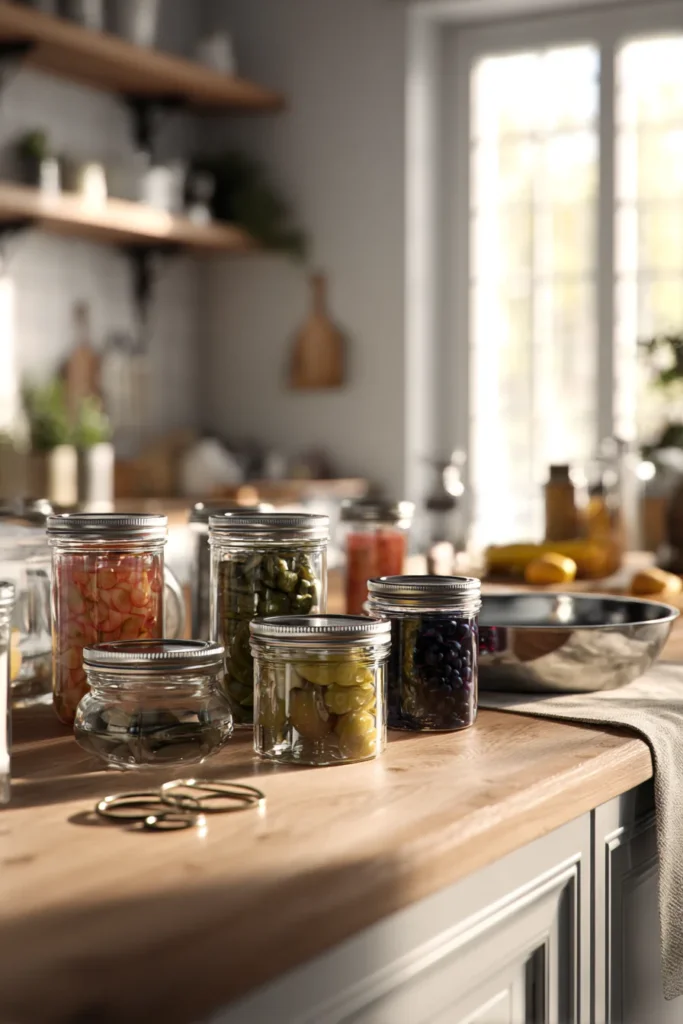
The most important rule for home canned food storage in 2026 is simple. Take the metal rings off as soon as the jars cool and seal.
Rings trap moisture against the lid edge. That moisture rusts the lid and hides a failed seal. You could open a jar thinking it is safe when it is actually spoiled.
Store jars without rings and wash the rings for reuse next season.
Idea 2: Keep Jars Between Fifty and Seventy Degrees
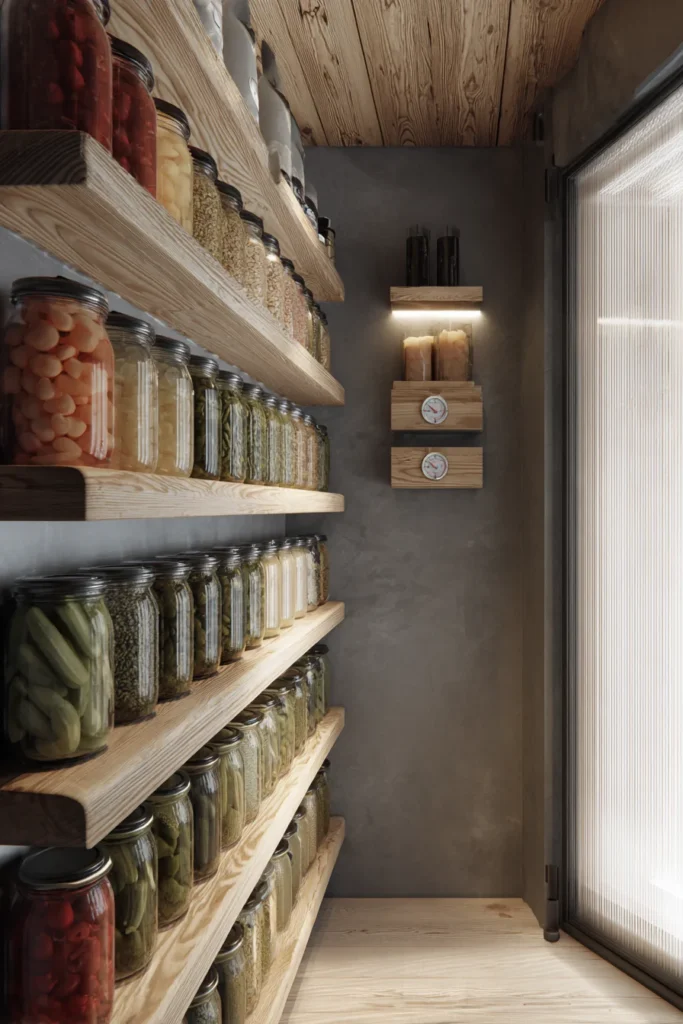
Temperature matters more than most people realize. According to USDA guidelines, canned food stored above ninety five degrees can lose half its nutrition in just two months.
A garage that hits summer highs will destroy your green beans. Find a cool spot like a basement interior closet or insulated pantry.
If you must use the garage, add insulation around the jar shelf.
Idea 3: Block All Light from Hitting the Jars
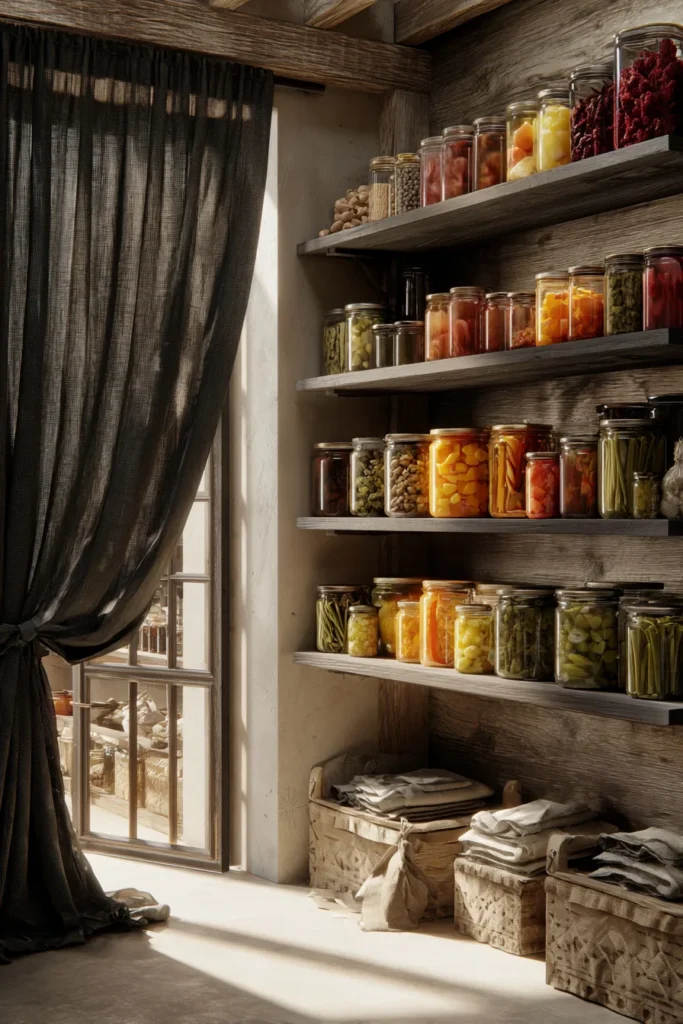
Light is the enemy of color and nutrients. Pickles turn pale and peaches fade to brown when exposed to constant light.
If your storage shelf is in a room with windows, hang a simple curtain over the front of the rack. Even a dark sheet works. If you prefer open shelving, use amber colored jars instead of clear glass.
They block the harmful rays.
Idea 4: Under Bed Rolling Racks for Half Pints
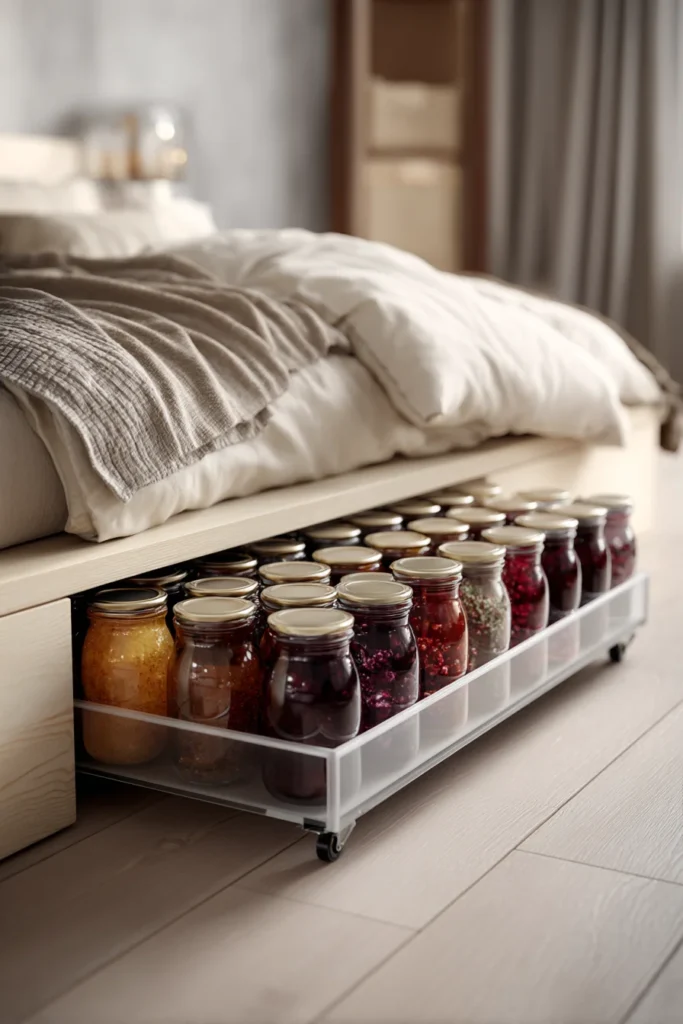
Half pint jars of jam and jelly are short and heavy. They fit perfectly under a bed.
Find a low profile rolling cart like the IKEA Vessla or any plastic bin with wheels. Fill it with your small jars and slide it under the guest bed.
The space stays cool and dark year round. You free up kitchen cabinets for taller items.
Idea 5: Slim Pull Out Tower Between Fridge and Wall
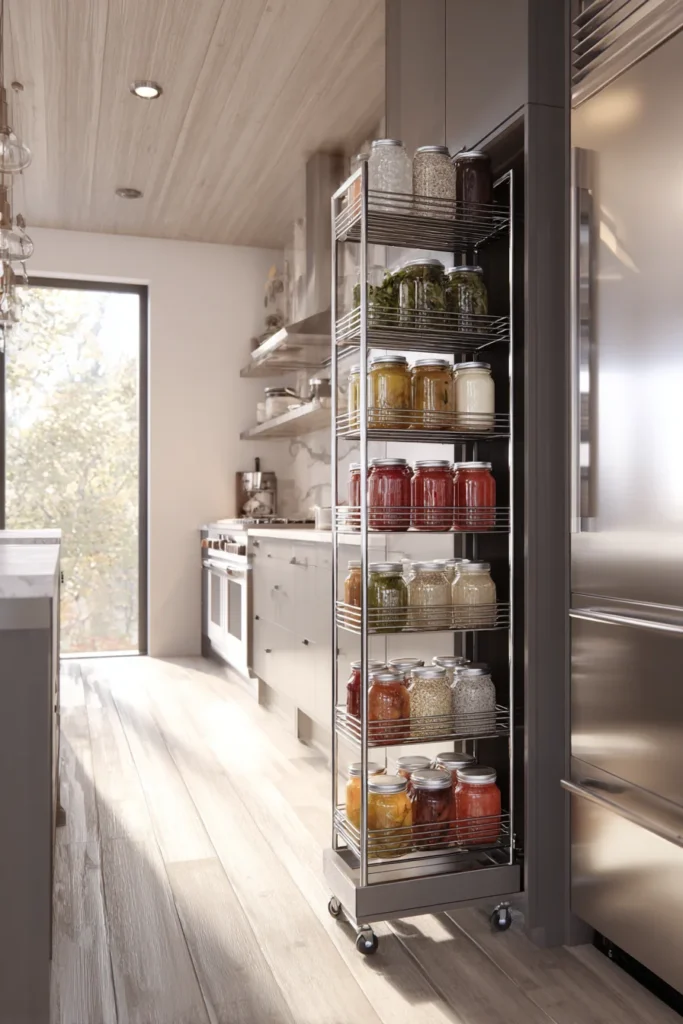
That six inch gap between your refrigerator and the wall is wasted space. Build or buy a narrow rolling shelf unit that slides into that gap.
Mount it on casters. Store quart jars of tomatoes and pickles on the shelves.
When you need one, pull the whole tower out like a hidden pantry. This is perfect for small kitchen canning storage ideas.
Idea 6: Under Stairs Riser Drawers
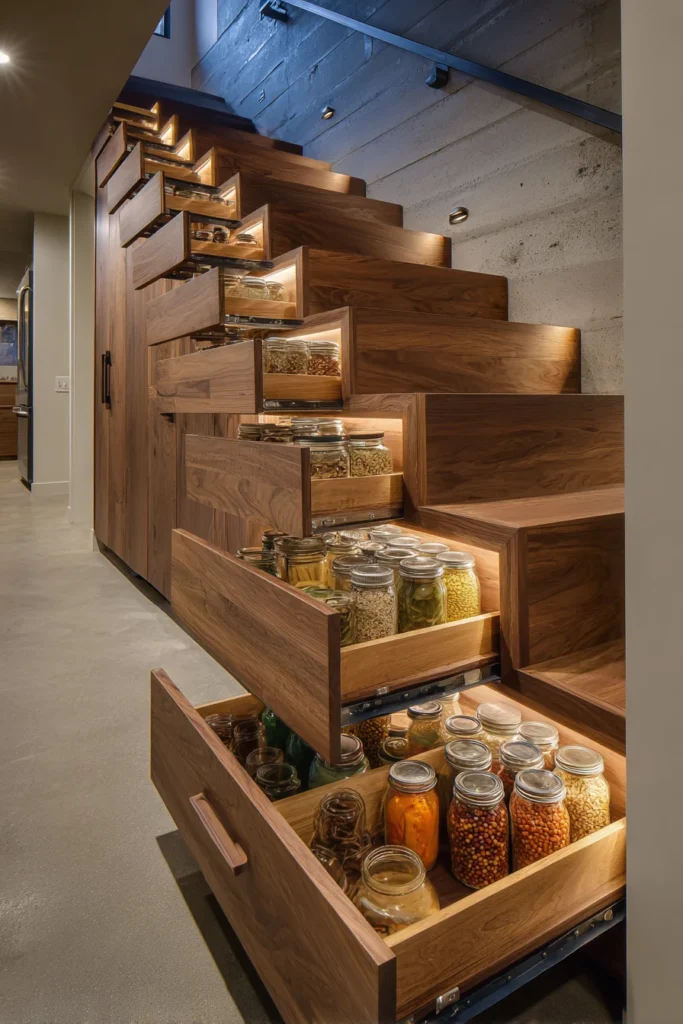
The space under basement stairs is usually a dusty dead zone. Build simple plywood drawers on heavy duty slides that fit into the stair risers.
Each drawer holds a single layer of jars lying on their sides or standing upright. Pull the drawer out to see everything at once.
This uses space that was literally doing nothing for you.
Idea 7: The Fence Rail Slide Under a Shelf
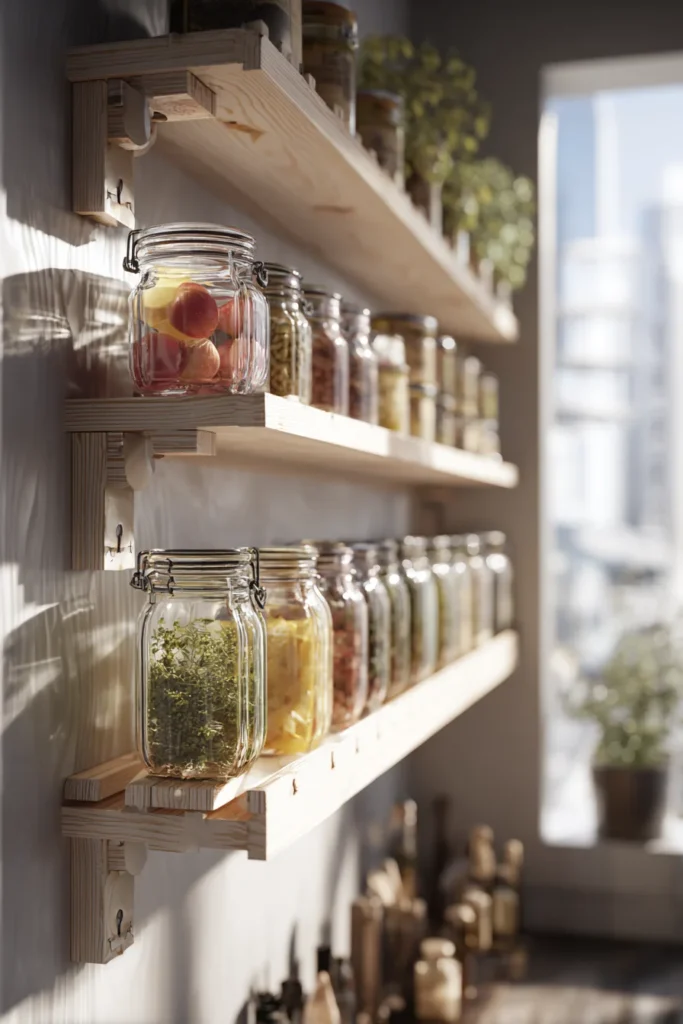
This is a clever DIY canning storage trick. Screw a wooden fence rail or a simple one by two board to the underside of a sturdy shelf.
Leave a gap just wide enough for the neck of a mason jar. The jar hangs by its rim. You slide jars in and out like they are on a track.
This doubles the storage under any existing shelf without adding bulk.
Idea 8: PVC Pipe Dividers for Safe Stacking
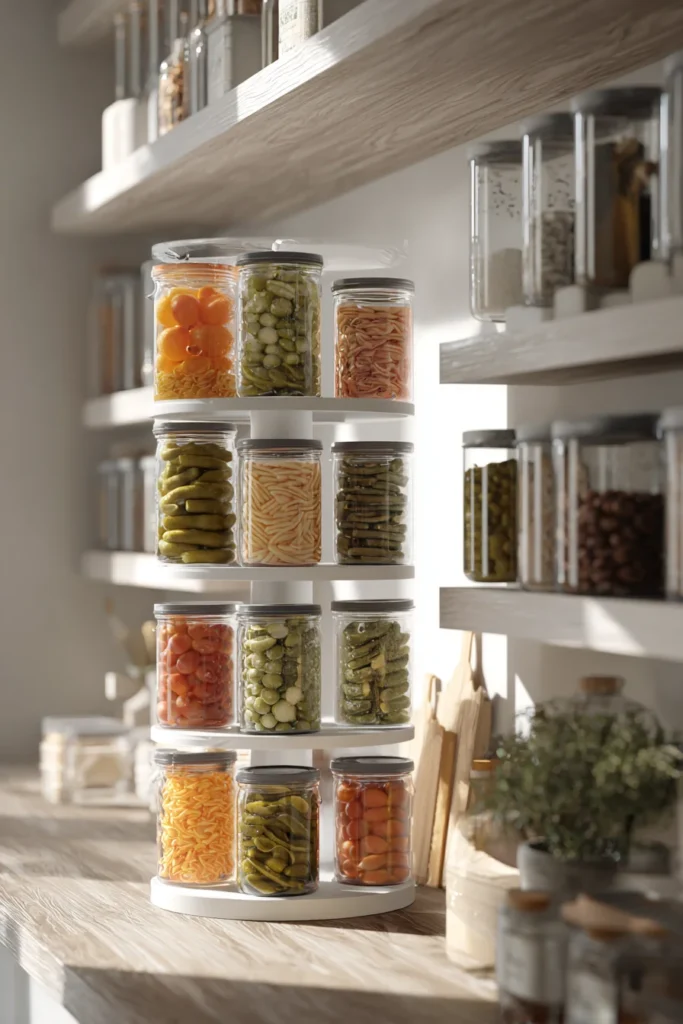
Never stack quart jars directly on top of each other. The weight can crack the seal on the bottom jar.
Cut four inch PVC pipe into rings about three inches tall. Place a ring between the bottom jar and the one above it. The weight transfers to the pipe not the lid.
You can stack jars two or three high safely. This replaces flimsy cardboard boxes.
Idea 9: Pegboard Wall for Empty Jars Only
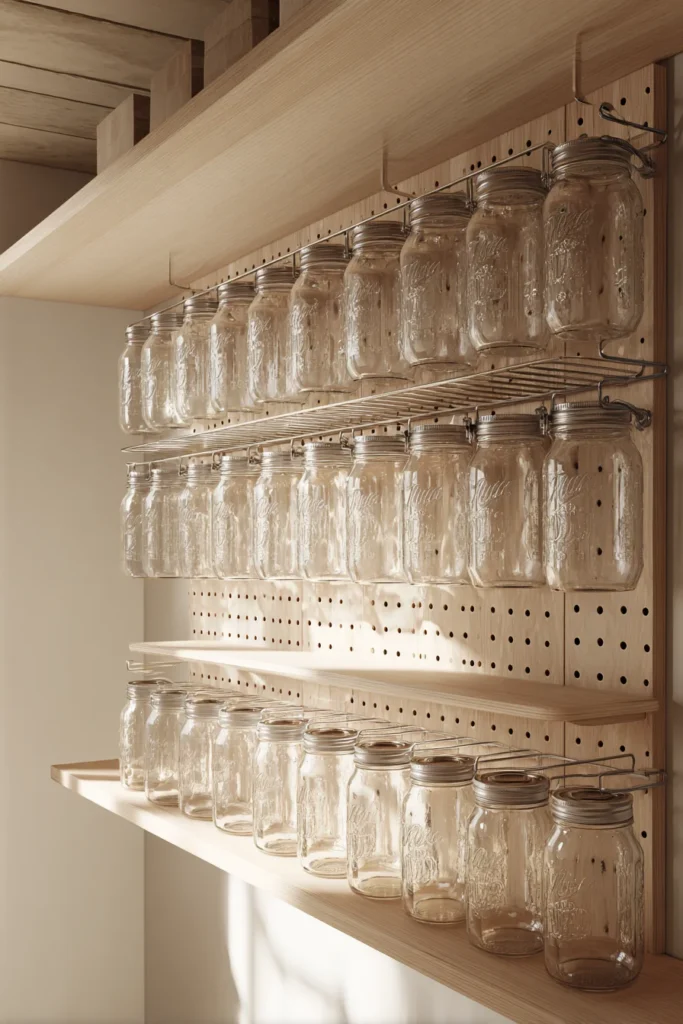
Empty jars take up cabinet space and collect dust when stacked on a shelf. Mount a sheet of pegboard to the wall in your pantry or basement.
Insert long pegboard hooks and hang empty jars upside down by their rims. They stay clean and dry.
You can see exactly how many pint jars you have left before canning season starts.
Idea 10: Magazine Holders for Lids and Bands
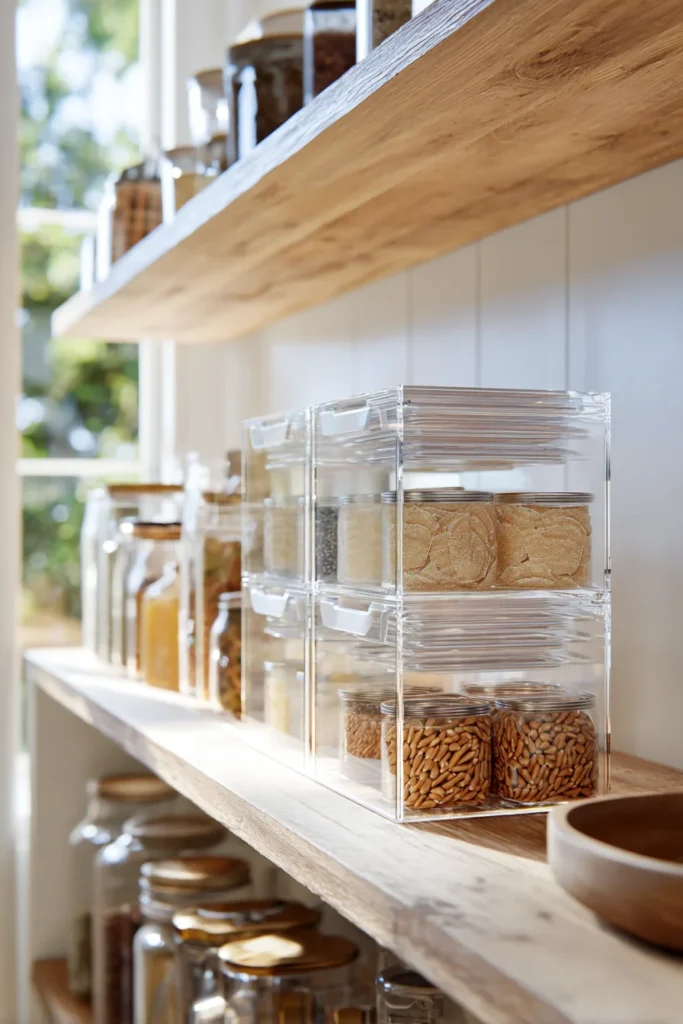
Lids and bands end up in a tangled mess at the bottom of a drawer. Use clear acrylic magazine file holders.
Stand them upright on a shelf. Label one for wide mouth lids and one for regular mouth lids. Stack the lids flat inside.
You can see how many you have left without digging. This small change saves frustration on canning day.
Idea 11: The Simple Wooden Jar Cradle
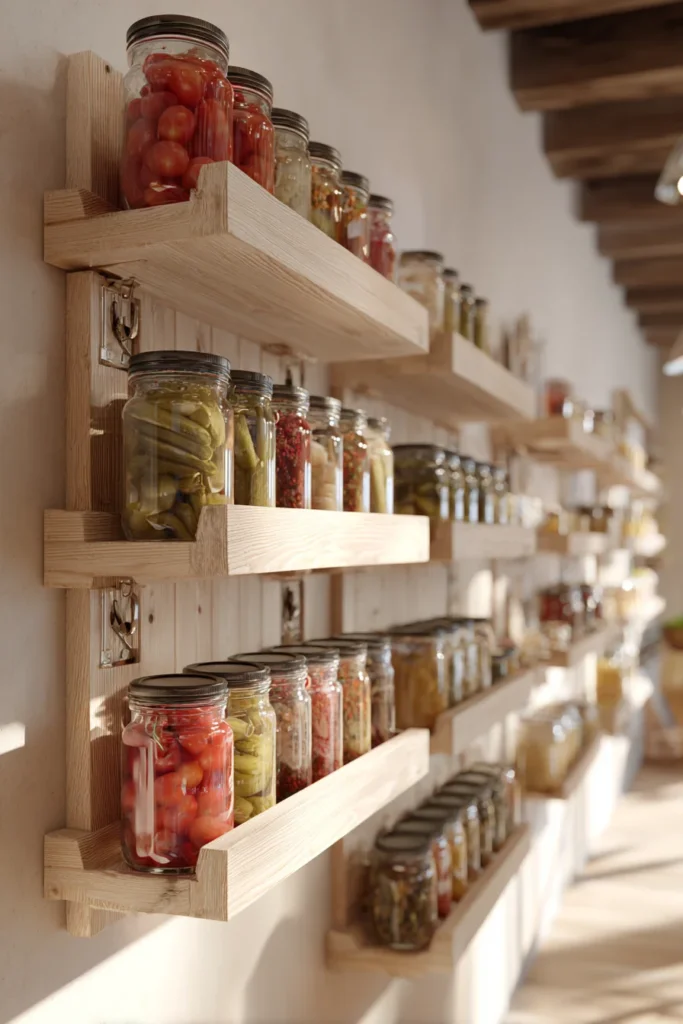
Round jars roll around on flat shelves. A small bump sends them crashing to the floor. Build a simple V shaped shelf using two boards nailed together at a ninety degree angle.
The jar sits snug in the groove. You can stack these cradles vertically on brackets.
It is one of the best organizing canning jars safely methods for earthquake prone areas.
Idea 12: Metal Bakers Racks Instead of Wood
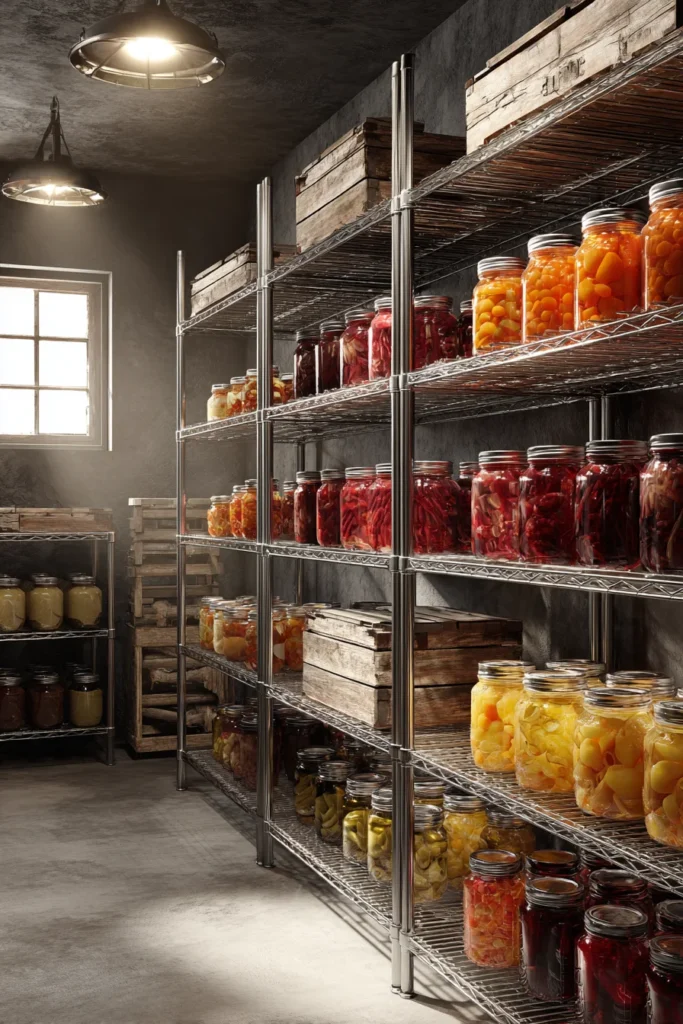
Basements and root cellars are damp. Wood shelving absorbs that moisture and grows mold.
That mold can transfer to your jar lids. Use chrome or stainless steel wire shelving units instead. They allow air to flow around every jar.
The metal does not hold moisture. Wipe them down once a year with a dry cloth and they last forever.
Idea 13: Small Dehumidifier on the Shelf
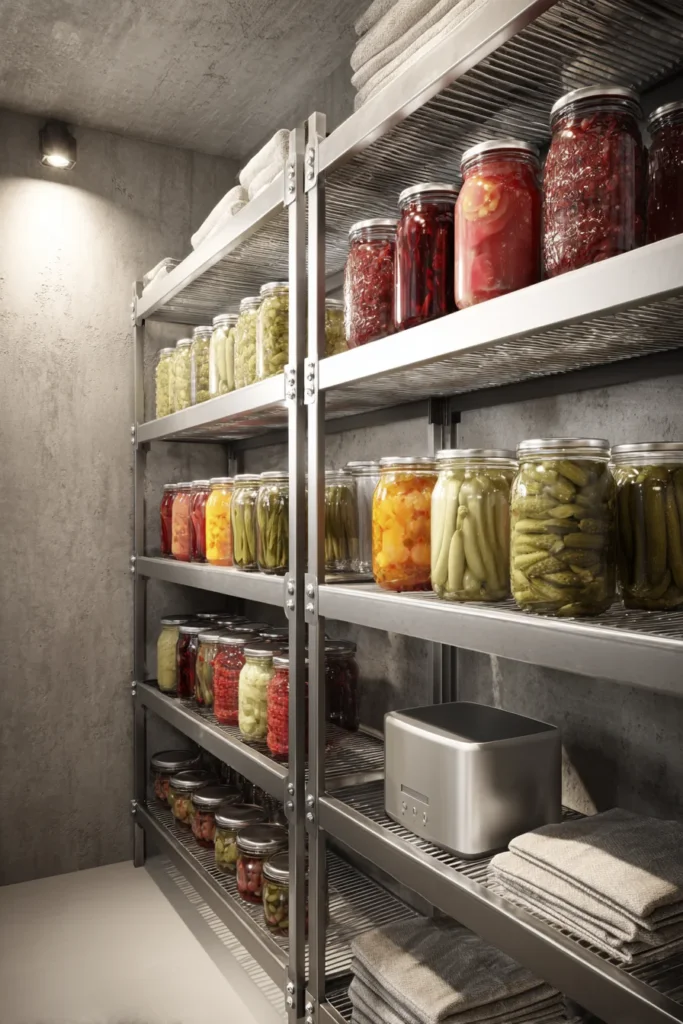
Even with metal shelves, humidity in a basement can rust jar lids over time. Place a small rechargeable dehumidifier right on the shelf next to your jars.
The kind meant for small closets works perfectly. Check it once a week and empty the water.
Keeping the air dry around your jars adds months or years to the seal life.
Idea 14: Inventory Whiteboard on the Shelf End
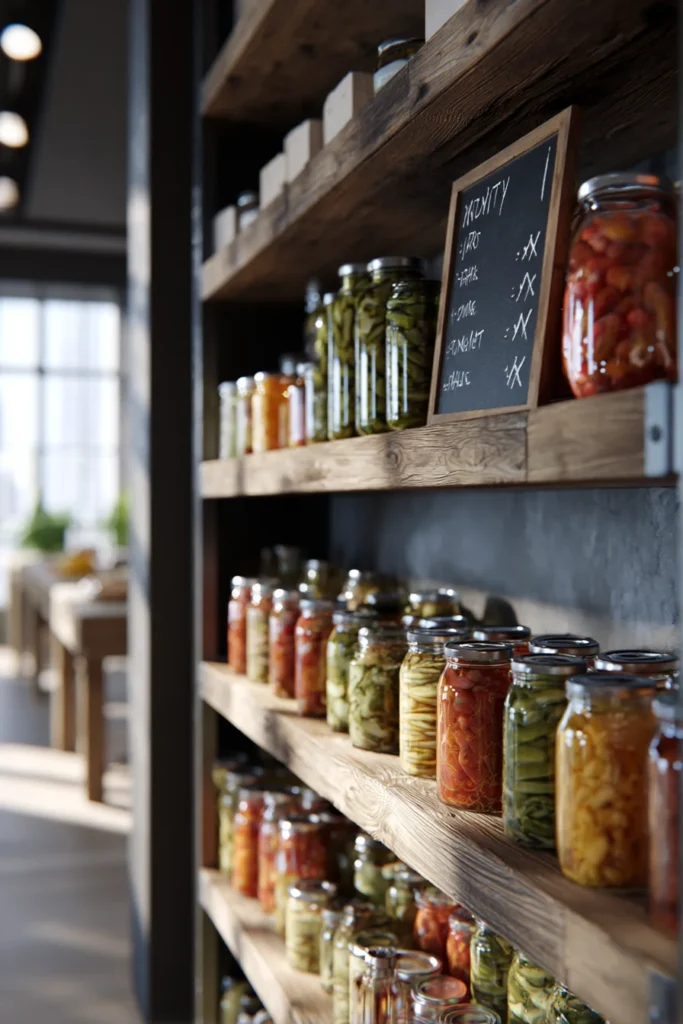
You cannot see what is behind the front row of jars. Paint the end panel of your shelf with chalkboard paint or stick on a small whiteboard.
Write the date you canned and how many jars of each item are on that shelf. When you grab a jar of salsa, erase the number and write the new count.
You will never lose a jar of pickles in the back again.
Idea 15: Open Shelving With a Raised Lip
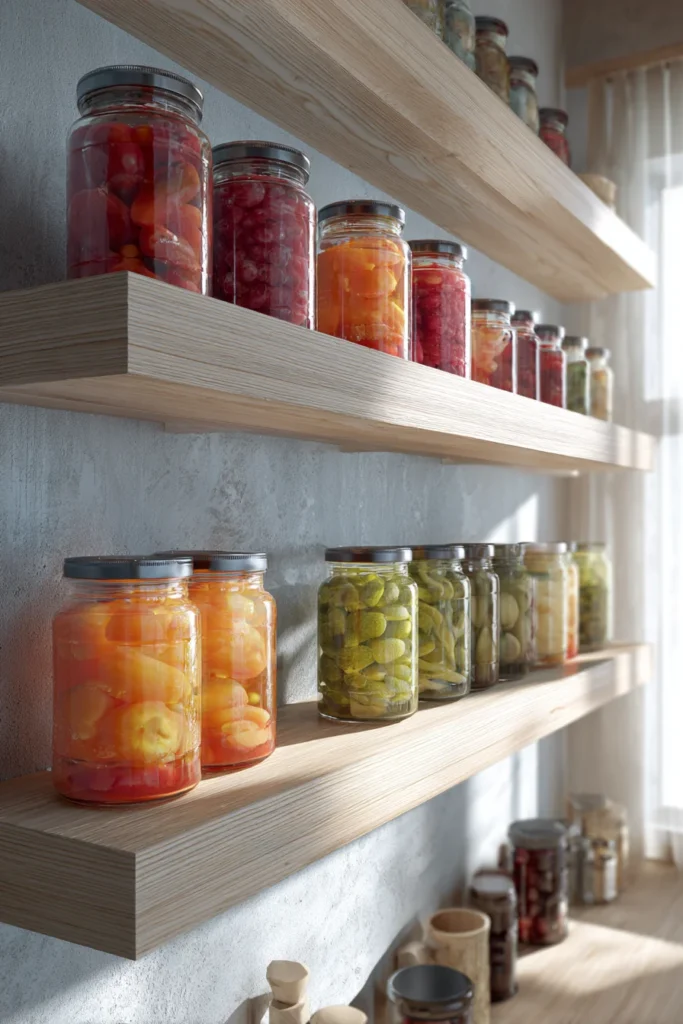
If you want to display your colorful jars of jam and tomatoes, go for it. Just make sure the shelf has a raised lip on the front edge.
A one and a half inch piece of trim prevents jars from sliding off if someone bumps the wall.
This is also important if you live where the ground shakes. Safety first even when things look pretty.
Idea 16: Never Store Jars Next to Potatoes or Onions
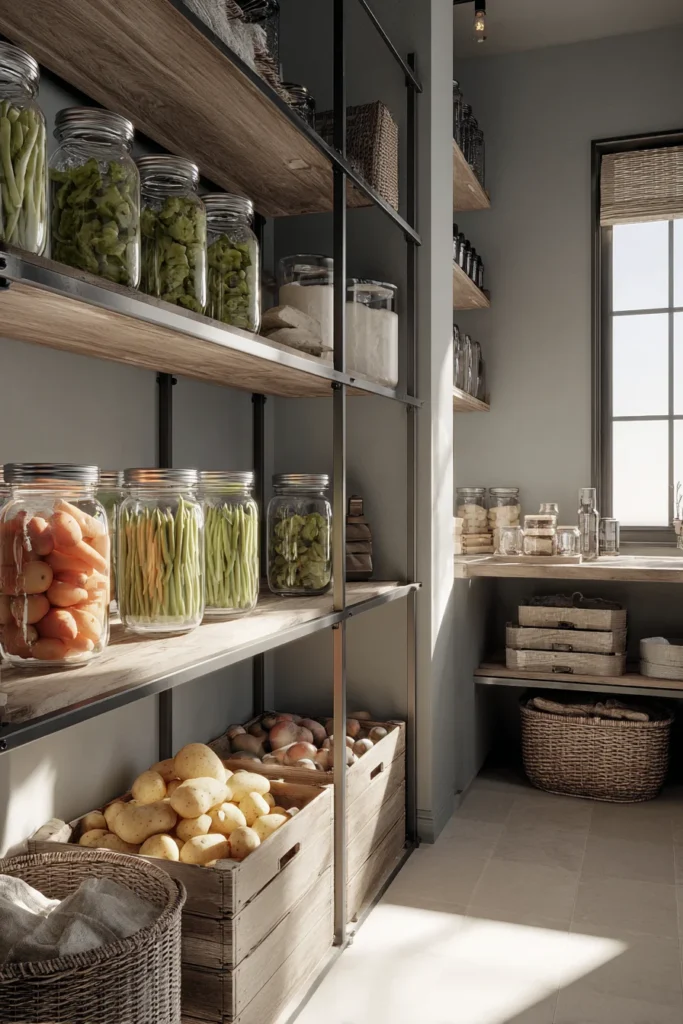
This is a mistake many new canners make. Potatoes and onions release ethylene gas as they sit in storage.
That gas can speed up the aging of your jar seals. Keep your canned green beans and carrots on a completely different shelf or even a different room from your root vegetable bins.
The food stays safer and tastes fresher much longer.
Conclusion
Safe canning storage comes down to three things. Cool temperatures. Dark spaces. And dry air. You do not need a walk in pantry or expensive custom shelving to protect your hard work.
Most of these ideas cost less than thirty dollars and take an afternoon to set up. Which of these 16 canning storage ideas will clear up your pantry floor first?
Go take the rings off your jars today and start there. Your future self will thank you.