13 Deck Shade Ideas for Windy Areas That Actually Work
Introduction
These ideas range from permanent structures to simple upgrades you can do this weekend. Each one addresses the real problem of wind catching shade and turning it into a hazard. Pick a few that fit your deck and your budget.
Idea 1: The Wind Sensor Louvered Pergola
A louvered pergola has a roof made of adjustable slats that open and close. The newer 2026 models come with a small wind sensor called an anemometer.
When wind speeds hit about twenty five miles per hour the slats automatically tilt open to let wind pass through or close flat to lock down.
This prevents uplift and protects the structure. Brands like StruXure Pergola X build these sensors right into the motor system. It costs more than a fabric shade but it will not end up in your neighbor’s yard.
Idea 2: A Solid Roof Extension Tied to the House
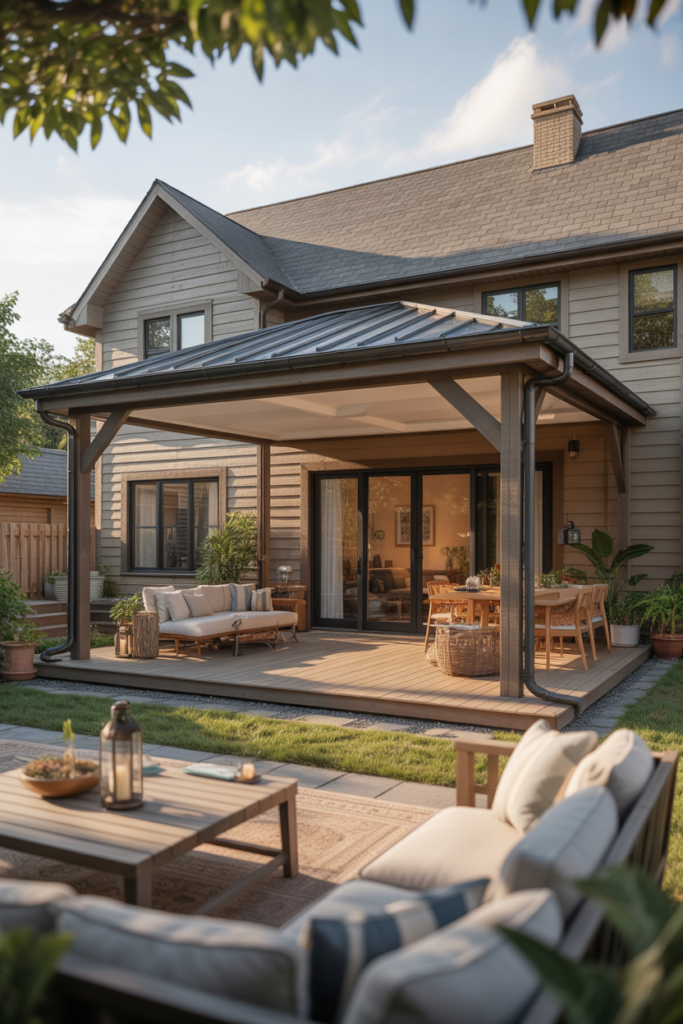
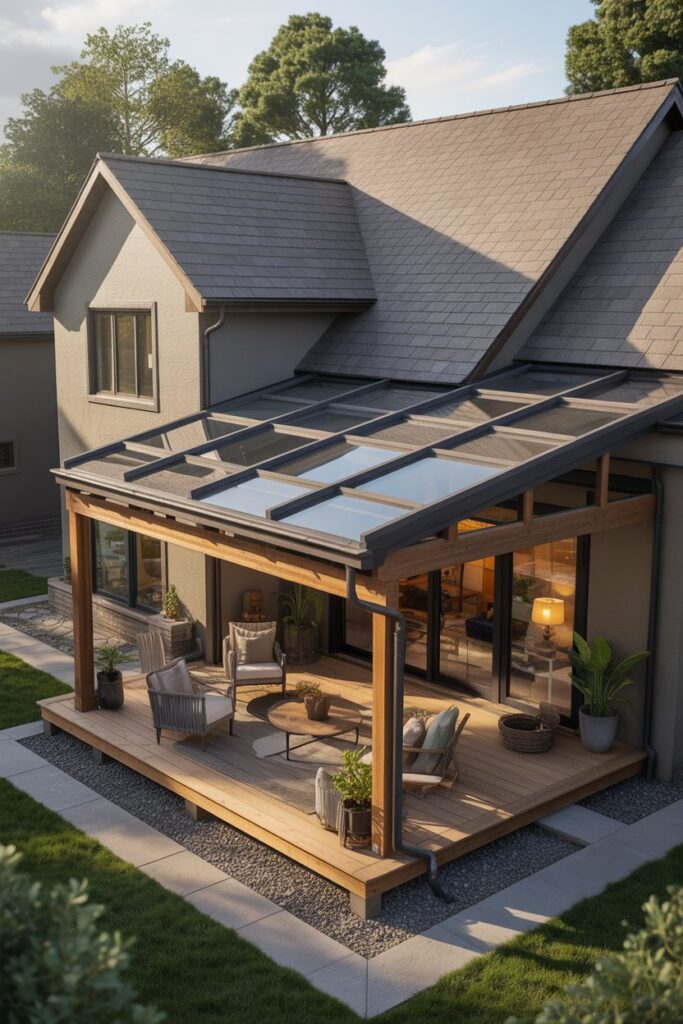
If you have a deck right off the back door consider adding a solid roof extension. This is a permanent patio cover that attaches directly to the house framing.
Because it ties into the existing roof structure it carries a wind rating of up to one hundred twenty miles per hour in most building codes.
You can use polycarbonate panels to let light through or solid plywood and shingles to match the house. This is not a weekend project but it solves the wind problem forever.
Idea 3: Polycarbonate Panel Roofing on a Pergola Frame
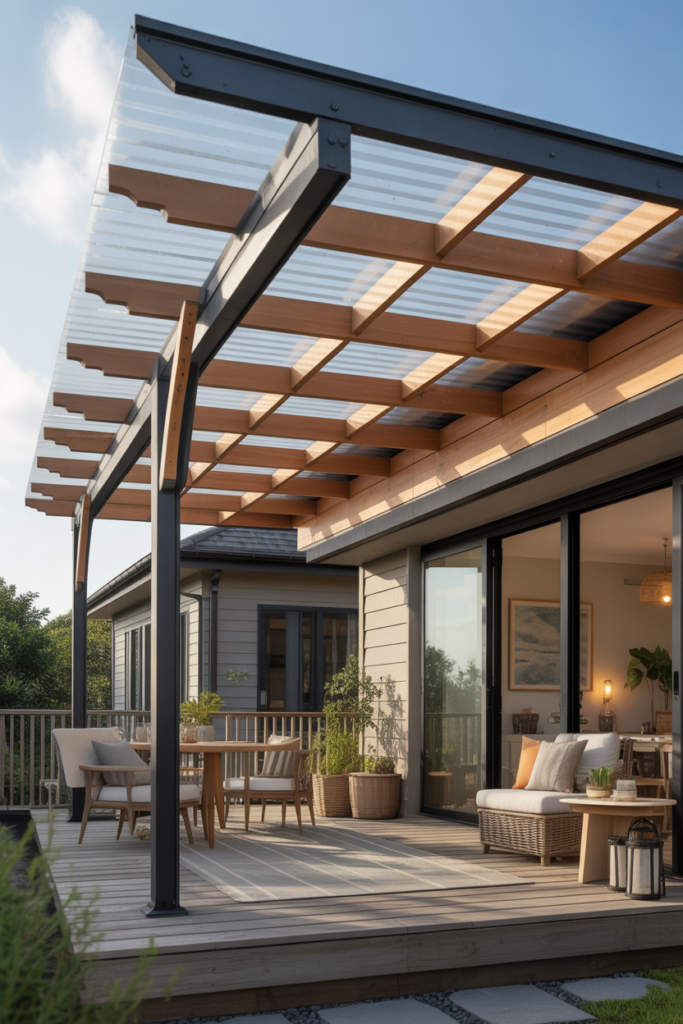
Polycarbonate panels are lightweight plastic sheets that look a bit like frosted glass. They are shatter resistant and when you screw them down with rubber washers they stay put.
Build a simple wood or metal frame on the deck and attach these panels. The wind flows over the smooth surface instead of catching underneath.
You get full shade and full rain protection without the flutter of fabric. This is a popular choice in coastal areas where salt air eats metal.
Idea 4: Permeable Mesh Shade Sails
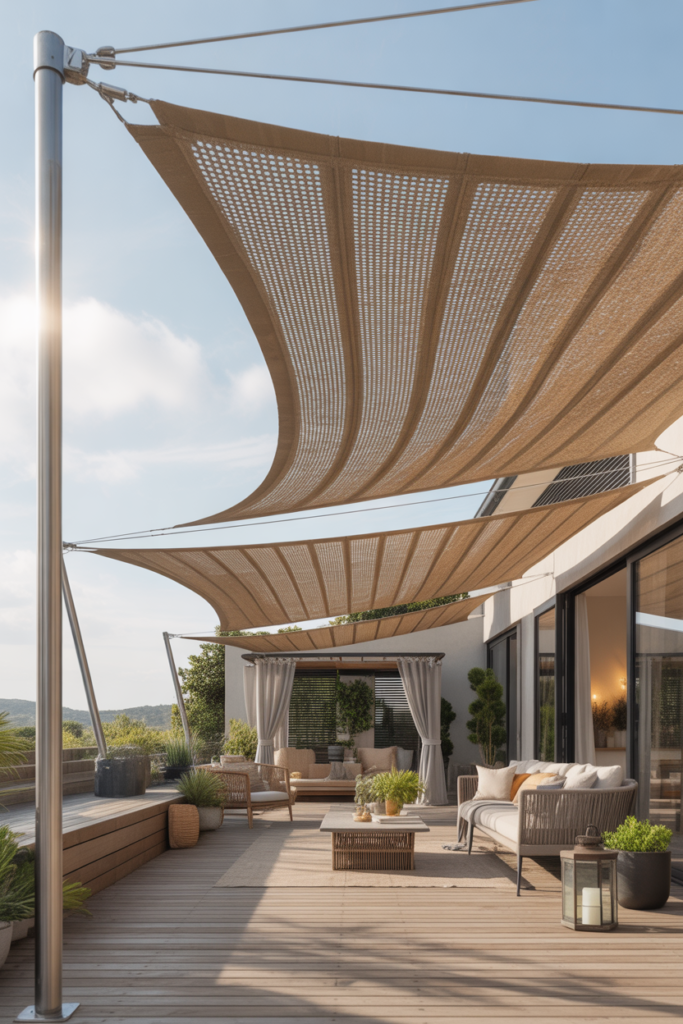
Most shade sails fail in wind because the fabric is solid. Wind hits the surface and pushes like a giant hand. Permeable mesh fabric like the Coolaroo Coolhaven material solves this. The fabric has tiny holes that let about half the wind pass right through. This reduces wind load by roughly fifty percent compared to solid fabric.
The sail still blocks UV rays but it does not become a parachute. If you want a shade sail in a windy area start with the right fabric.
Idea 5: Stainless Steel Hardware for Sail Installation

Even the best mesh sail fails if the hardware rusts or snaps. Do not use the free hook and eye kit that comes in the box.
Those zinc coated hooks corrode in one season and bend under pressure. Buy Grade 316 stainless steel turnbuckles and D shackles. This is marine grade hardware. It costs about twelve dollars per turnbuckle.
These components keep the sail tight and resist the constant tugging of the wind. A tight sail sheds wind. A loose sail catches it and tears.
Idea 6: The Hypar Twist Sail Shape
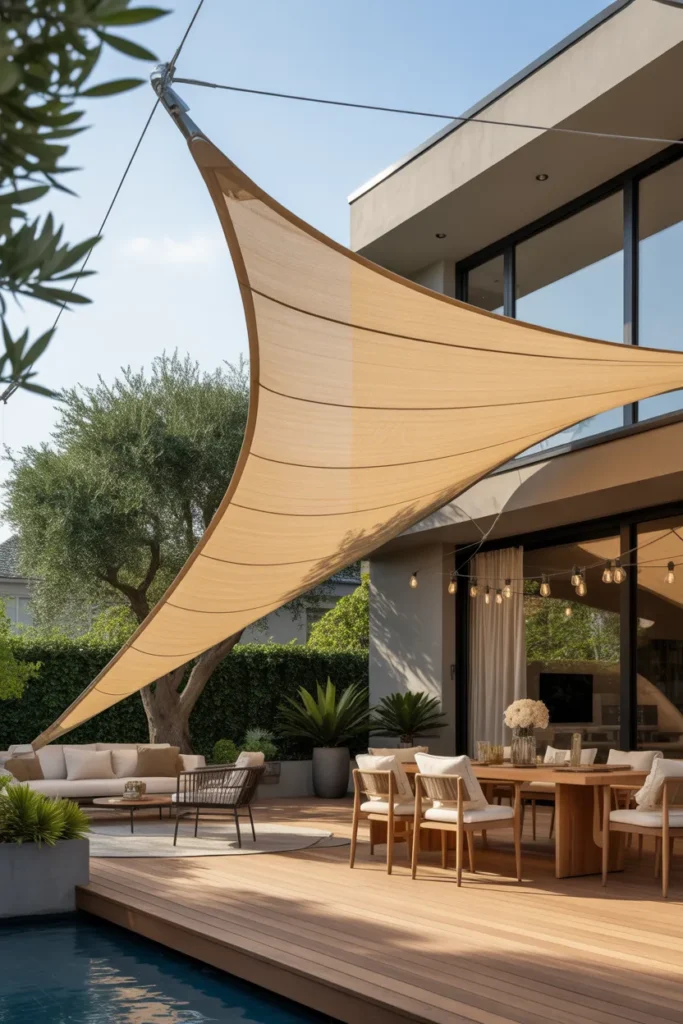
The way you install a sail matters as much as the material. A flat sail cupped like a bowl catches wind like a kite.
Install the sail with two high corners and two low corners. This creates a twisted shape called a hypar. Water runs off and wind slides over the curve instead of filling it up. You need different mounting heights for this.
Put one corner on the house high up. Put the opposite corner on a shorter post in the yard. The sail stays taut and stable even in gusts.
Idea 7: A Heavy Center Post Market Umbrella
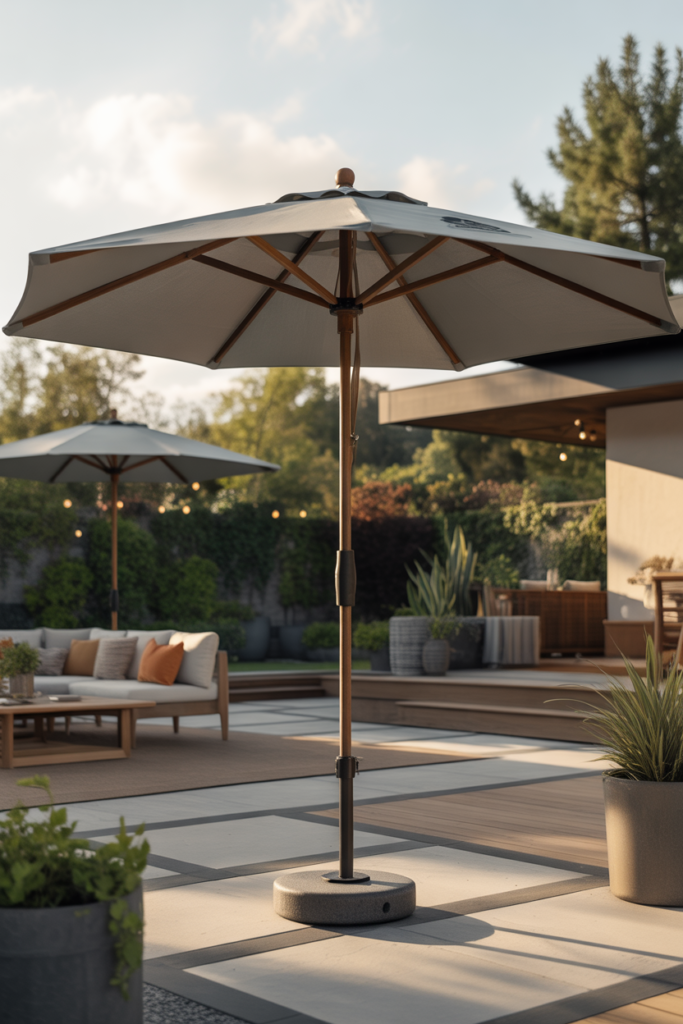
Cantilever umbrellas look nice because the pole is off to the side. But they are a wind disaster waiting to happen.
The offset weight creates leverage against the base. A heavy center post umbrella is actually safer in wind.
The weight sits directly under the canopy. Choose one with a vented dual canopy top so wind escapes through the gap. Look for fiberglass ribs that bend and snap back instead of aluminum ones that stay bent. This is the classic patio umbrella done right for breezy spots.
Idea 8: The Right Umbrella Base Weight
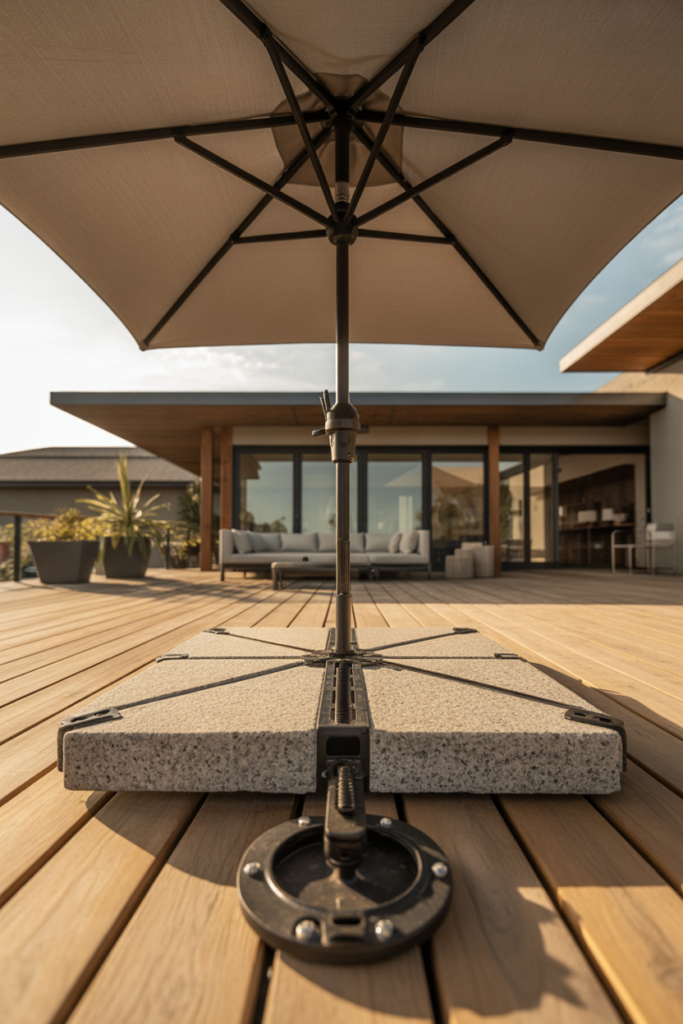
An umbrella is only as good as what holds it down. A standard plastic base filled with sand weighs maybe thirty pounds.
That is nowhere near enough. For a seven and a half foot umbrella in a windy area you need at least fifty pounds. For a nine foot umbrella you need seventy five pounds. Granite bases or cast iron bases are the way to go.
Even better is a clamp on mount attached directly to a sturdy deck railing post. That post is bolted to the frame of the deck. The wind is not moving that.
Idea 9: Windbreak Shrubs and Grasses Around the Deck
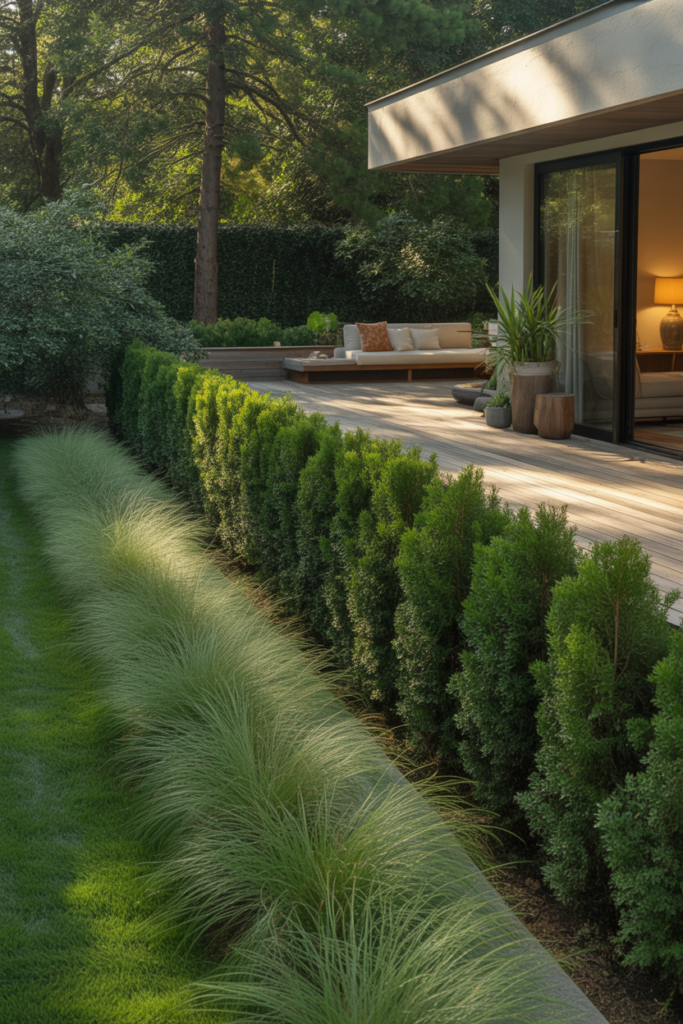
You can slow the wind before it ever hits your shade structure. Plant a row of dense shrubs like Arborvitae or tall ornamental grasses like Switchgrass on the windy side of the deck.
These plants act as a living fence. They do not stop the wind completely but they knock down its speed. The air that reaches your deck is calmer and less likely to flip furniture.
Check your plant hardiness zone and pick species that grow quickly. In three to five years you have a permanent wind buffer that also looks nice.
Idea 10: Laser Cut Metal Privacy Screens
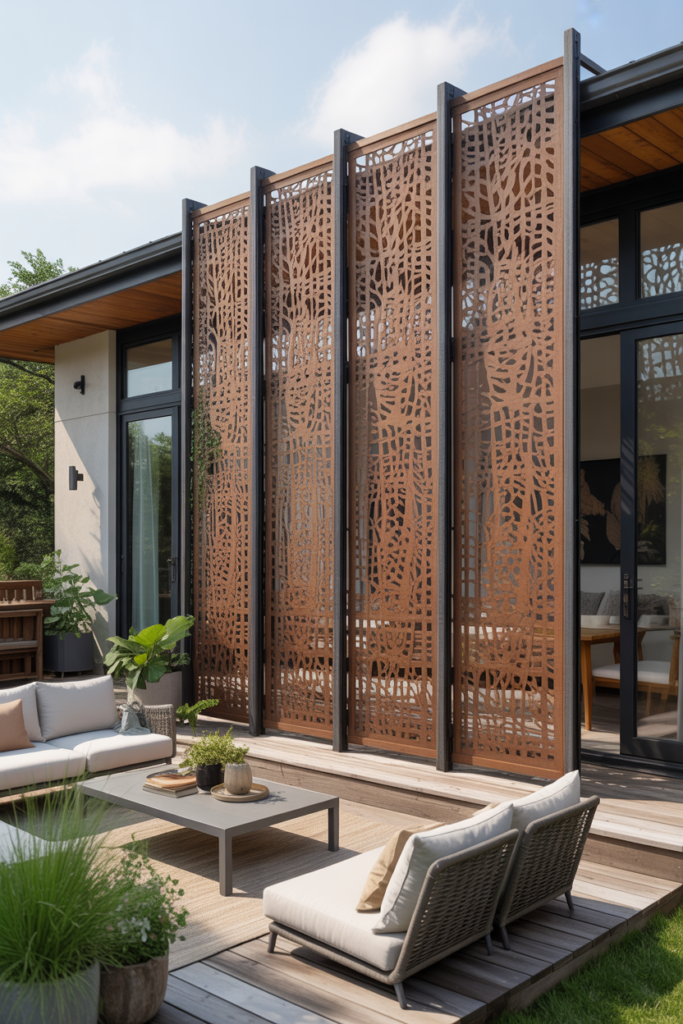
A solid wall sounds like the best windblock but it actually creates turbulence on the other side. Wind hits the wall and curls over the top creating a swirling mess on the deck.
A screen that is about fifty percent solid works better. Laser cut aluminum or Corten steel panels break up the airflow without creating that swirl. The wind passes through the gaps but loses its punch.
Mount these panels on the upwind side of the deck. You get privacy and a calmer sitting area.
Idea 11: Lateral Arm Awnings with Side Tracks
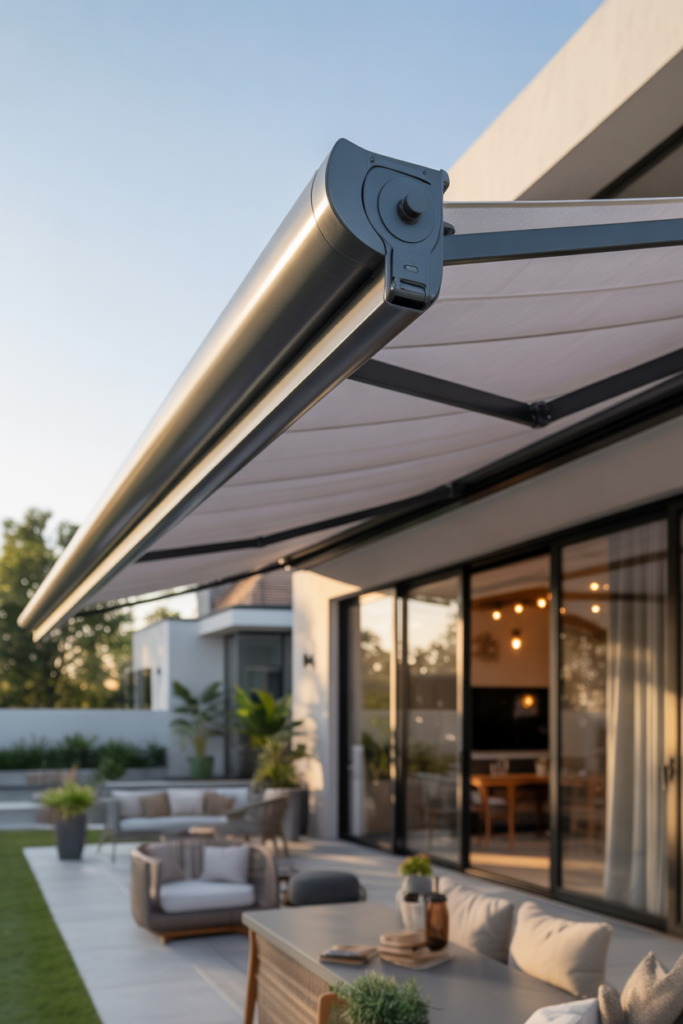
Retractable awnings that roll out from the house are notorious for flapping in the wind. The fabric is only attached at the front bar. The sides are open.
A lateral arm awning with a wind lock system adds a track down each side. The fabric edges slide inside these tracks.
It cannot billow out sideways like a flag. This makes a huge difference. You can leave it extended in moderate breezes without that awful snapping noise. SunSetter ProTech is one example of this tracked design.
Idea 12: Motorized Screens with Zip Track Technology
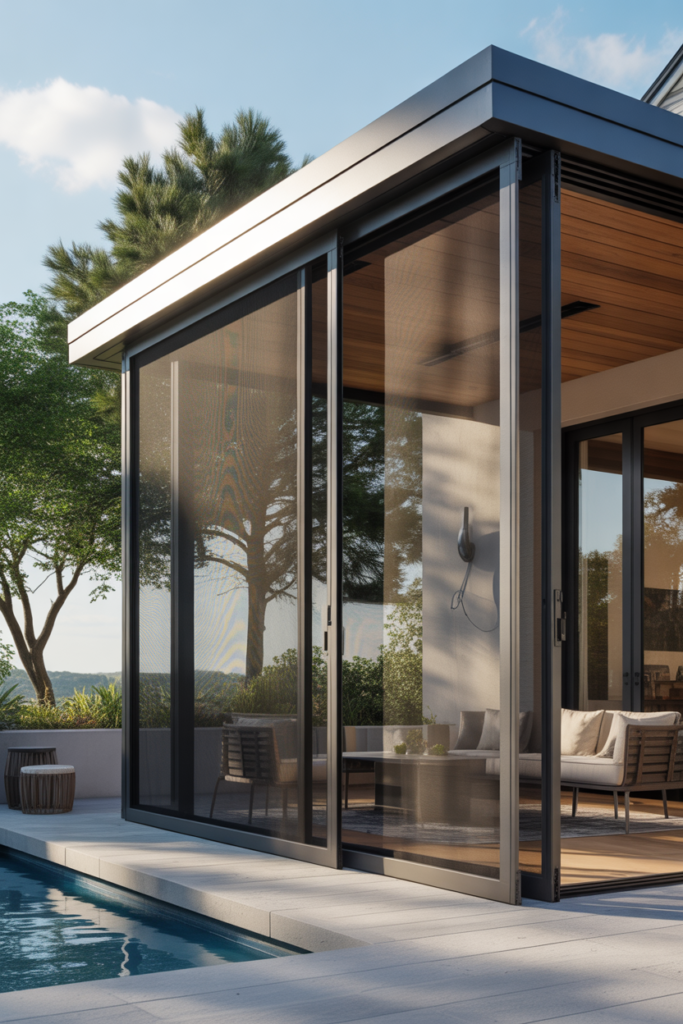
Motorized screens drop down from a header and seal the deck opening. The best ones for windy areas use zip track technology.
The edges of the screen have a zipper like bead that locks into a vertical channel on each side. Once engaged the wind cannot pull the screen out of the track. It might press against it but it will not rip it loose.
Many 2026 models include a wind sensor that retracts the screen automatically if gusts get too strong. This protects the motor and the fabric.
Idea 13: Weighted Drop Down Curtains
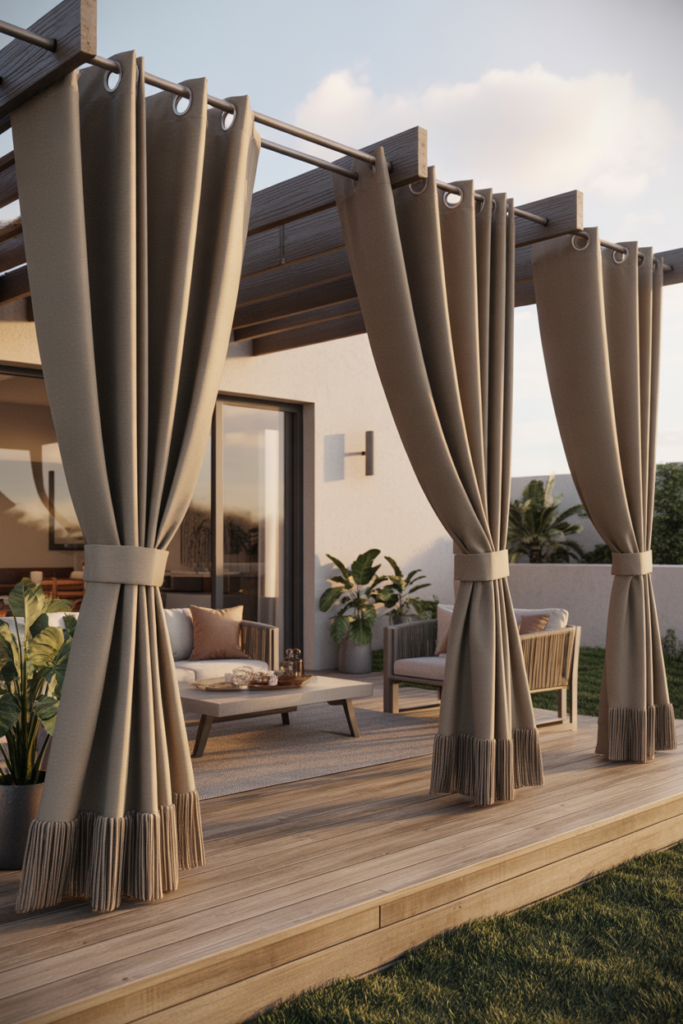
For a simple and affordable solution hang outdoor curtains on the windy side of the deck. Use heavy outdoor canvas fabric not lightweight sheer panels.
Sew a hem bar into the bottom pocket. A length of metal pipe or a wooden dowel works well. This weight keeps the curtain from flapping up.
Secure the bottom with simple ties or bungee cords to the deck railing. When the wind really howls you can roll them up and tie them. When it is just breezy they hang heavy and still.
Conclusion
You do not have to give up on shade just because you live where the wind blows. The key is either locking it down tight or using materials smart enough to let the breeze pass through. A heavy base here a stainless turnbuckle there and suddenly your deck becomes usable all summer long.
We covered thirteen deck shade ideas for windy areas. From smart pergolas to properly weighted umbrellas to living windbreaks made of shrubs. Pick two or three ideas that fit your space and your skill level.
Which of these will you try first? Take a look at your current umbrella base. If you can lift it with one hand it is time for an upgrade. Your future self sipping iced tea in a calm shady spot will thank you.